
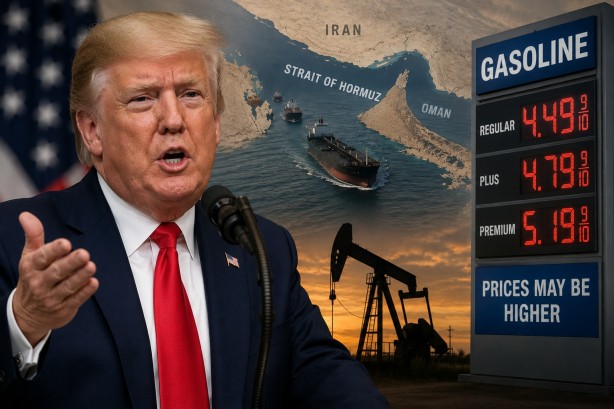
Amid ongoing tensions with Iran and disruptions in the crucial Strait of Hormuz, U.S. President Donald Trump has called on Americans to accept a modest increase in gasoline prices. Addressing supporters at a rally in New York, Trump framed the higher fuel costs as a necessary trade-off to prevent Iran from acquiring nuclear weapons. He also hinted at the possibility of declaring the Strait of Hormuz as U.S. territory following a hypothetical victory over Iran.
In response, Iranian officials have dismissed Trump’s assertions, maintaining their grip over the strategic waterway. Deputy Foreign Minister Kazem Gharibabadi emphasized that Iran would uphold its blockade until the U.S. acknowledged the situation as he described it—a defeat for Washington. Meanwhile, Iranian Foreign Minister Abbas Araghchi indicated that Tehran has not yet decided to re-engage in talks with the U.S., adding that shipping through the strait would only resume if Iran’s demands were met.
The standoff has severely impacted the flow of tankers through the Strait of Hormuz, a critical passage for global oil and natural gas distribution. The resulting uncertainty has led to higher crude prices, which in turn have escalated fuel costs. U.S. gasoline prices have surged to an average of approximately $4.08 per gallon, marking a 29% increase from the previous year. Similarly, Brent crude prices are experiencing significant weekly gains.
On the economic front, Iran is also feeling the strain. Iranian President Masoud Pezeshkian has attributed the country’s rising inflation to the U.S. blockade, sanctions, and limitations on Iranian oil exports. Concurrently, the Trump administration has threatened further financial sanctions against Tehran, as diplomatic efforts to broker a ceasefire remain at an impasse.