
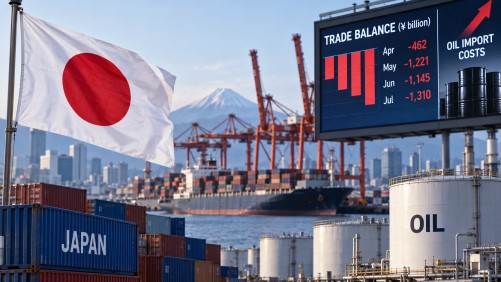
Japan’s economy continues to grapple with trade deficits, as the nation recorded a shortfall of approximately 1.1 trillion yen ($7 billion) in August. This marks the fourth consecutive month of trade deficits, largely driven by escalating import costs due to rising oil prices and geopolitical unrest in the Middle East.
According to preliminary figures from Japan’s Finance Ministry, the country’s imports surged by 28% compared to the previous year, totaling 11.15 trillion yen ($71.9 billion). This increase is primarily attributed to the soaring energy prices exacerbated by disruptions around the crucial Strait of Hormuz, which have impacted global oil supplies and shipping routes.
Japan, heavily dependent on imported energy, has felt the strain of these heightened crude oil prices acutely. Meanwhile, exports from Japan saw a rise of 19.3% year-on-year, reaching 10 trillion yen ($64.5 billion). This growth was fueled by robust shipments of automobiles and computer chips, highlighting some resilience in the export sector despite the ongoing challenges.
Trade relations with major partners showed mixed results. Exports to the United States saw a significant jump of 24.9%, while imports from the U.S. increased by a notable 55.2%. Similarly, exports to European countries went up by 11%, accompanied by a 20.4% rise in imports from the region. In contrast, trade with the Middle East experienced a downturn, with exports declining by 5.2% and imports dropping by 4.2%, underscoring the impact of regional instability on trade activity.
The persistent trade deficit underscores the vulnerabilities in Japan’s economic landscape, particularly its reliance on energy imports. As geopolitical tensions continue to influence global oil markets, Japan faces ongoing challenges in balancing its trade dynamics amid fluctuating energy costs and shifting global trade patterns.