
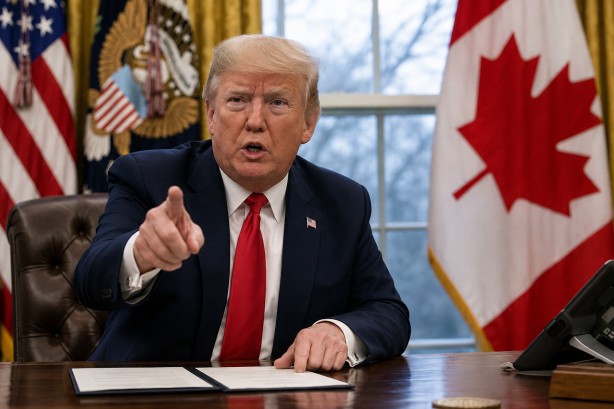
Tensions between the United States and Canada have intensified following the collapse of trade negotiations, leading to heightened discord in their economic relationship. US President Donald Trump has directed criticism at Canada after talks failed to yield an agreement, escalating the ongoing trade conflict between the neighboring countries.
In response to the breakdown, the United States has implemented a 50% tariff on approximately $20 billion worth of Canadian goods, which impacts a broad spectrum of products. Canadian Prime Minister Mark Carney has declared that Canada will retaliate with equivalent tariffs, emphasizing that the country will not capitulate to the demands set forth by Washington.
Characterizing the situation as a trade war, Carney accused the US of launching an economic offensive against Canada. Jamieson Greer, the US Trade Representative, justified the tariffs as a necessary measure to safeguard American workers and maintain the integrity of supply chains.
This trade dispute has sparked concern among businesses and legislators in both nations. Canadian business organizations have cautioned that exporters and small enterprises might suffer major financial setbacks. Meanwhile, US lawmakers representing border states have expressed worry that the tariffs could result in higher costs for businesses, farmers, and consumers.
Canada’s proposed retaliatory tariffs are slated to commence on September 8, targeting goods such as steel, dairy products, appliances, and electronics. The growing discord has further clouded the prospects of the US-Mexico-Canada trade agreement, which is pivotal in regulating a significant portion of trade across the North American continent.