
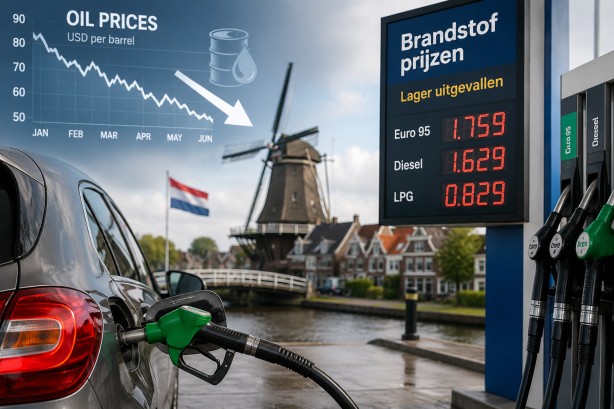
The recent pause in military actions between the United States and Iran has led to a significant drop in oil prices, a development that could soon benefit Dutch consumers with lower fuel costs. Brent crude oil, which was trading at over €88 per barrel at the end of the previous week, has seen a decrease to just above €81. This decline is further supported by a stronger euro, which makes oil imports less expensive for European nations, as the commodity is priced in US dollars.
Despite the reduction in crude oil prices, the advisory gasoline price in the Netherlands remains relatively high, at €2.634 per liter. This figure is only slightly below the record high of €2.646 per liter reached earlier in the year. The surge in fuel prices can be traced back to the escalation of conflict involving Iran in late February, which has had a lasting impact on the global oil markets.
Analysts predict that the decreased oil prices will eventually be mirrored at the fuel pumps, potentially offering some relief to consumers. However, there is typically a delay of several days before shifts in global oil prices are reflected in retail fuel costs. This lag time means that Dutch motorists might need to wait a bit longer before seeing the benefits of the current dip in crude oil prices.
The interplay of geopolitical tensions and currency fluctuations often plays a crucial role in determining oil prices, as evidenced by the recent events. The cessation of hostilities between the US and Iran has contributed significantly to the current downward trend in oil prices, highlighting the sensitive nature of the markets to international relations and economic indicators.